Uncategorized
Why Class Diagram Modeling Matters in UML
After capturing system functionality through Use Case modeling, the next step in disciplined software design is defining the logical structure of the system. This is where UML Class Diagrams play a critical role.
Class Diagrams provide a structured way to represent system entities, their attributes, behaviors, and relationships. They form the backbone of object–oriented modeling, ensuring that the architecture of a software system is clearly defined before development begins.
Within Sparx Enterprise Architect, Class Diagrams serve as the bridge between conceptual system understanding and technical implementation. They help teams translate functional requirements into structured designs that developers can implement consistently.
Identifying Classes from Requirements
Class Diagram modeling begins by analyzing system requirements and identifying the key entities that participate in the system.
These elements typically include:
Classes – domain entities that represent real-world or system concepts.
Attributes – data properties that describe each class.
Operations (Methods) – behaviors or functions that the class performs.
In Sparx Enterprise Architect, classes can be directly linked to requirements and Use Cases, ensuring traceability from stakeholder intent to system design. This alignment ensures that every class defined in the architecture supports a clear functional purpose.
Understanding Relationships Between Classes
UML provides several relationship types that define how classes interact within the system architecture.
- Association
Represents a general relationship between two classes, indicating that objects of one class communicate or interact with objects of another. - Aggregation
Represents a “whole part” relationship where parts can exist independently of the whole. - Composition
A stronger form of aggregation where the lifecycle of the part depends entirely on the whole. - Generalization (Inheritance)
Allows a subclass to inherit attributes and operations from a parent class, supporting hierarchical modeling and reuse.
These relationships enable architects to represent complex domain structures clearly while maintaining scalability and consistency.
Attributes, Operations, and Visibility
Well-defined Class Diagrams include detailed information about class members.
- Attributes represent the data stored within objects.
- Operations (Methods) represent the behavior or services provided by the class.
Visibility indicators help control access to these elements:
- Public – accessible from any class
- Private – accessible only within the class
- Protected – accessible within the class and its subclasses
- Package – accessible within the same package
Defining these elements clearly ensures that system behavior and data structures remain well-organised and maintainable.
Benefits of UML Class Diagram Modeling in Sparx Enterprise Architect
- Clear representation of system structure and domain entities
- Improved alignment between requirements, design, and implementation
- Better communication between architects and development teams
- Structured object-oriented system design
- Built-in traceability across the development lifecycle
By combining UML standards with EA’s modeling environment, teams establish a strong structural foundation for scalable software architecture.
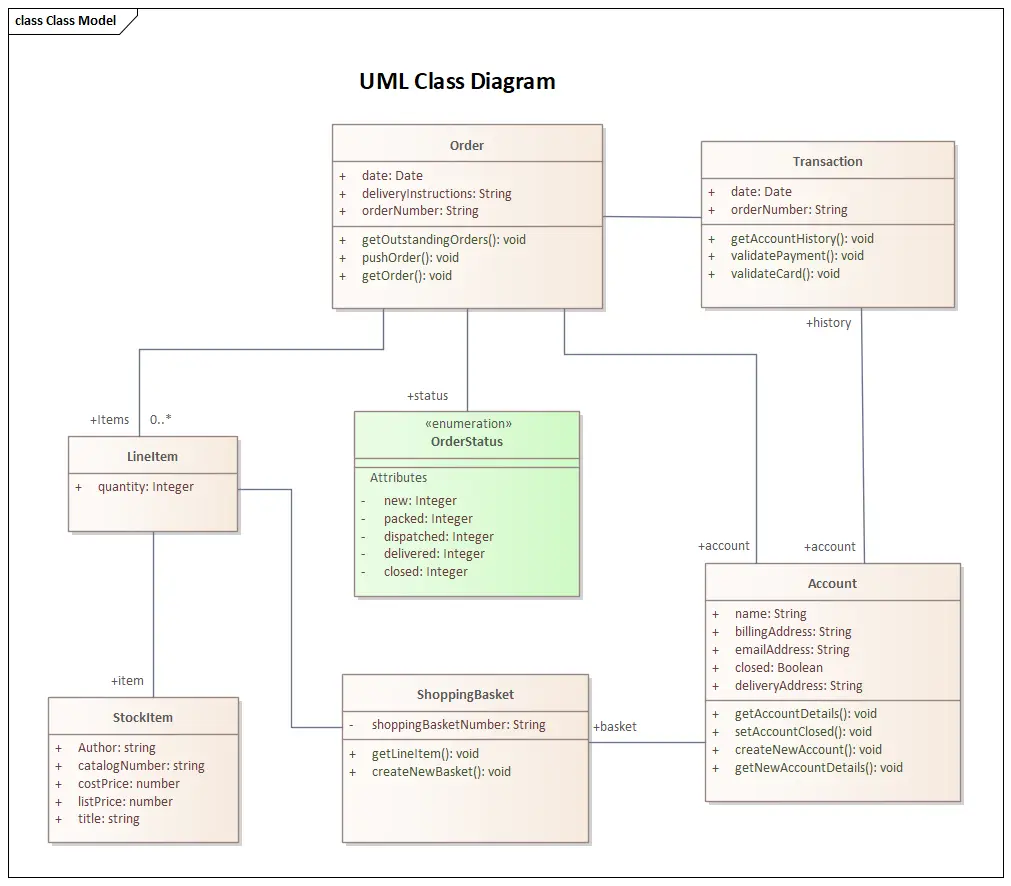
Figure 1: UML Class Diagram Modeling in Sparx EA
Accelerate Class Diagram Modeling with Sparx Systems India
Sparx Systems India supports organizations in implementing effective UML Class Diagram modeling practices using Sparx Enterprise Architect through:
- UML Class modeling framework setup and repository configuration
- Object-oriented design and software architecture best-practice consulting
- Hands-on UML training for architects, analysts, and development teams
- Prolaborate demos for collaborative visualization and stakeholder reviews
To explore how UML Class Diagram modeling in Sparx Enterprise Architect can strengthen your software architecture foundation and enable structured, traceable, and scalable system design, write to us at sales@sparxsystems.in, or contact us to get started.