


Sparx Systems Enterprise Architect
Why Activity Modeling Matters in UML
After defining system structure and high-level behavior, the next step in disciplined software modeling is understanding how processes flow within the system.
UML Activity Diagrams provide a structured way to model workflows, business processes, and control logic. They help teams visualize how activities are executed, how decisions are made, and how parallel processes interact.
Within Sparx Enterprise Architect, Activity modeling serves as a bridge between Use Case scenarios and detailed system behavior, ensuring that business logic is clearly defined and aligned with implementation.
Identifying Activities from System Requirements
Activity modeling begins by analyzing requirements and identifying how tasks and processes are executed within the system.
These elements typically include:
- Activities – individual units of work within a process.
- Control Flows – the sequence in which activities are executed.
- Decision Points – branching logic based on conditions.
- Parallel Flows – concurrent execution of multiple activities.
In Sparx Enterprise Architect, Activity elements can be directly linked to Use Cases and requirements, ensuring end-to-end traceability from business needs to system workflows.
Understanding Activity Diagram Elements
UML provides specific elements to model workflows effectively.
- Actions and Activities
Actions represent atomic steps, while activities represent larger processes composed of multiple actions. - Control Flows
Control flows define the sequence in which actions are executed within the workflow. - Decision and Merge Nodes
Decision nodes introduce branching logic, while merge nodes combine alternative flows. - Fork and Join Nodes
Fork nodes enable parallel execution, while join nodes synchronize parallel paths.
These elements help model complex workflows in a structured and understandable way.
Modeling Control Flow and Process Execution
Activity modeling focuses on how control moves through the system.
- Sequential Flow defines step-by-step execution of activities.
- Conditional Flow introduces decision-based branching.
- Parallel Flow enables concurrent processing of tasks.
In Sparx Enterprise Architect, these flows can be analyzed to ensure workflows are complete, optimized, and aligned with business requirements.
Benefits of UML Activity Modeling in Sparx Enterprise Architect
- Clear visualization of business processes and workflows
- Improved alignment between business requirements and system behavior
- Early validation of process logic before development
- Better communication between business analysts and technical teams
- Identification of inefficiencies and bottlenecks in workflows
By combining UML Activity modeling with EA’s capabilities, organizations can design efficient, scalable, and well-structured process flows.
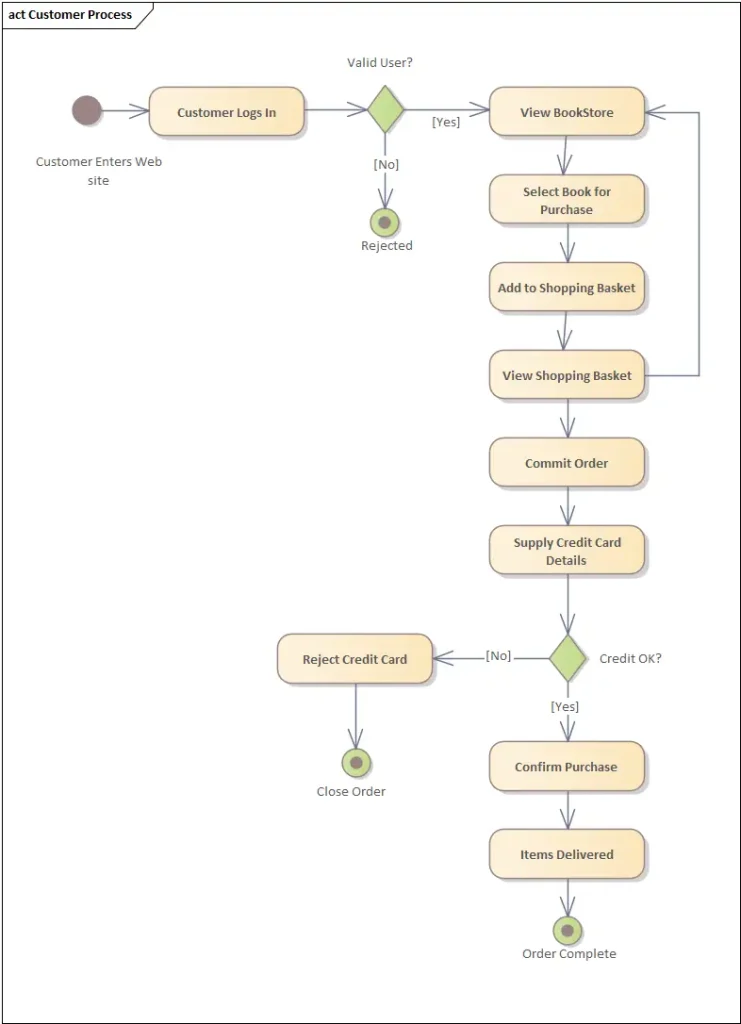
Figure 1: UML Activity Diagram Modeling in Sparx EA
Accelerate Activity Modeling with Sparx Systems India
Sparx Systems India supports organizations in implementing effective UML Activity modeling using Sparx Enterprise Architect through:
- Activity modeling framework setup and repository configuration
- Business process and workflow modeling best-practice consulting
- Hands-on UML training for architects, analysts, and development teams
- Prolaborate demos for collaborative workflow visualization
To explore how UML Activity modeling in Sparx Enterprise Architect can streamline your business processes and enable structured, traceable, and scalable workflow design, write to us at sales@sparxsystems.in or Contact us to get started.